





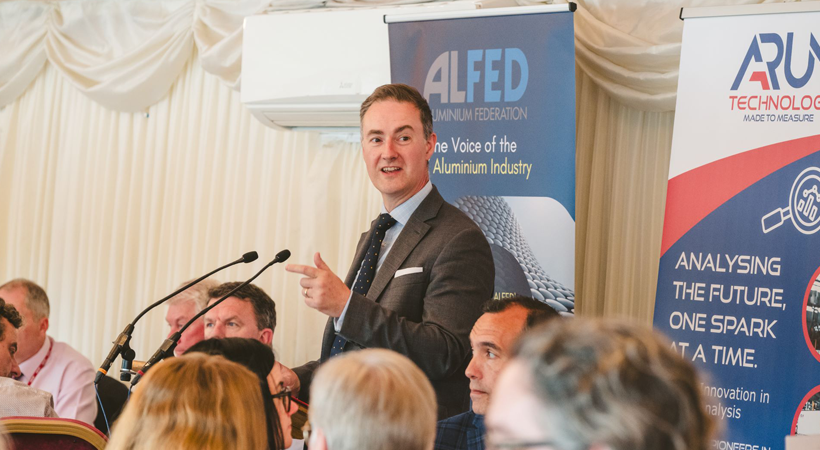
The Aluminium Federation (ALFED) hosted its House of Lords Lunch Reception yesterday (Tuesday 2nd June) at the Palace of Westminster in London, UK.
The event brought together more than 80 ALFED members, parliamentarians, and senior representatives from across the UK aluminium value chain to discuss the future strategic direction of the sector.
Hosted by Lord John Horam at the House of Lords, the reception welcomed the Minister for Industry, Chris McDonald MP, and Antonia Bance MP, reflecting growing political recognition of aluminium's importance to UK manufacturing, industrial resilience, defence, circularity, and the energy transition.
Discussions throughout the day centred on industrial energy competitiveness, recycling and remelting capability, circular economy growth, CBAM alignment, defence supply chain resilience, and the need to retain greater strategic material value within the UK economy.

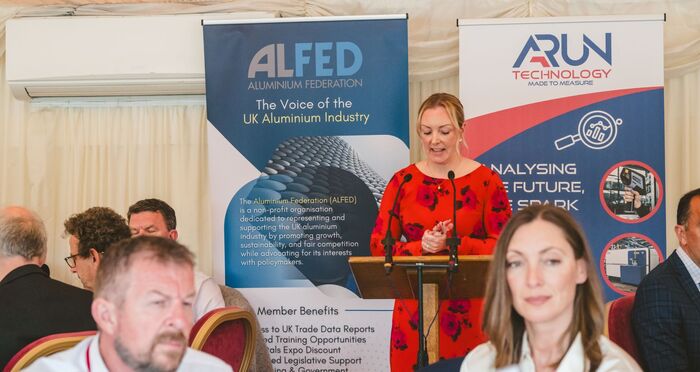
Nadine Bloxsome, CEO of ALFED.
Speaking following the event, Nadine Bloxsome, CEO of ALFED, said: “The discussions reinforced the importance of improving industrial competitiveness, strengthening domestic processing capability, supporting circularity, and ensuring aluminium remains central to future manufacturing growth, defence resilience, and net zero delivery.
“The UK aluminium industry has the capability, expertise, and ambition to play a major role in delivering these objectives.
“If we can create the right conditions for investment, circularity, and long-term competitiveness, the opportunity for UK manufacturing and industrial growth is significant.”
In his address, Chris McDonald MP (see above) highlighted aluminium's strategic importance to the UK's future industrial growth, recognising its role across aerospace, automotive, renewable energy, defence, and advanced manufacturing.
He reinforced the UK Government's commitment to improving industrial competitiveness, strengthening domestic processing capability, and increasing the retention of material value within the UK economy.
The Minister also acknowledged ALFED's contribution to the Government's Metal Circularity Group, and reiterated his ambition to see more aluminium processing, recycling, and value-added manufacturing taking place within the UK.

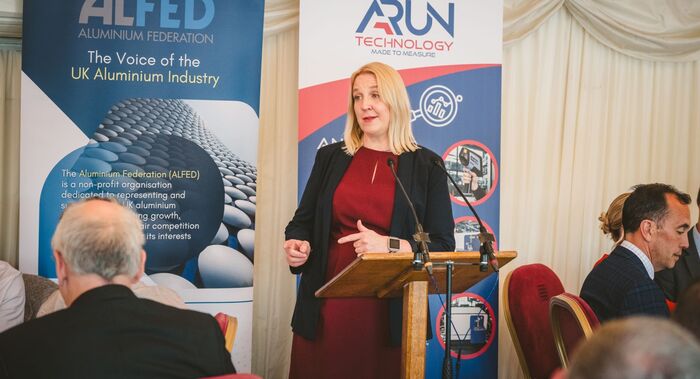
Antonia Bance, MP for Tipton and Wednesbury.
Antonia Bance MP reinforced the importance of aluminium businesses to the UK's manufacturing base, particularly across the West Midlands, highlighting the sector's role in electric vehicles, renewable technologies, construction, and defence.
She welcomed the Government's renewed focus on industrial strategy and competitiveness, while encouraging continued engagement between industry and policymakers to ensure future policy development reflects the realities facing UK manufacturers.
The reception also marked the formal launch of ALFED's new Positions & Strategic Priorities Framework (2026-2027), setting out a unified industry-led approach to strengthening the long-term competitiveness, resilience, and growth of the UK aluminium sector.
The framework outlines ALFED's core strategic priorities across:
- Energy competitiveness and industrial viability.
- Circularity, scrap value, and domestic retention.
- Midstream capability and industrial growth.
- Trade and carbon policy alignment.
- Supply chain resilience and defence positioning.
- The role of ALFED's Sector Groups and Trade Committee in supporting evidence-led industry representation.
The framework highlights that the wider UK aluminium industry supports more than 108,000 jobs and contributes approximately £9.4 billion in GVA to the UK economy.
Despite this significant contribution, the sector continues to face growing pressures around energy costs, investment, trade dynamics, and domestic processing capability.
ALFED said it would continue to work closely with members, Government departments, and wider stakeholders to support a competitive, resilient, and sustainable UK aluminium value chain.
